
Fernwayer's Things to Do in Algarve
The Algarve, Portugal, is more than dramatic cliffs and golden beaches. The things to do here unfold through artisan workshops, coastal trails, traditional markets, and the living cultures of southern Portugal.
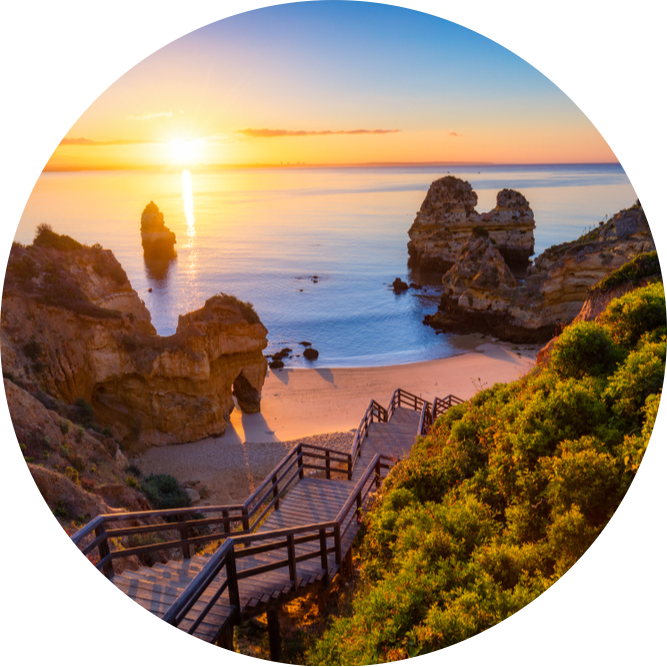
The Algarve has been one of Portugal’s main holiday destinations for decades. Its paradisical beaches, award-winning golf courses, and top-notch seafood have always drawn the crowds, including locals themselves who drive down south as soon as the summer hits.
But there’s much more to see in this region beyond the coast. When looking for experience makers here, we went after the people who were working on preserving cultural traditions and natural landscapes. They’re the ones who will introduce you to the artisans still crafting Algarve’s traditional baskets with strings of palm leaf, the farmers raising the cattle, and the beekeepers keeping a fragile ecosystem alive.
Many of our Algarve experiences are centered around Loulé, a town known for its creative community. Others take you further afield, into the salt pans of Castro Marim, an organic farm in Aljezur, or the hilltop villages of Alte and Monchique. Each experience is designed to entertain while supporting social impact and cultural conservation, ensuring your visit contributes positively to the local community and helps preserve the heritage of this beautiful region.
FERNWAYER'S ALGARVE ESSENTIALS
We’ve handpicked a collection of experiences that capture the authentic Algarve. These are the best tours you’ll find of this southern Portuguese region. Each one invites you to see a different side of the Algarve, from its lively market towns to its diverse wildlife and artisan traditions.
Our tours take you deep into the countryside to meet the people shaping this region. From coppersmiths working behind the scenes to mold the iconic cataplana, to people preserving beehives in the mountains of Serra do Caldeirão, and farmers raising black pigs on acorns.
Explore our essential Algarve tours below or see all Algarve experiences here.
MAKE THE MOST OF YOUR TIME
Fernwayer’s Algarve Journeys — suggested itineraries, designed by us, booked by you — are anchored in our curated experiences. How to plan 7 days in the Algarve? Our curated Algarve's Crafts, Land and Sea journey takes you across the region, starting in Faro, before heading towards Loulé and the east coast. From there, you’ll venture inland to discover the hilltop villages of Salir and Mochique and return to the coast via Aljezur.
The Human Edit
Need help planning your trip? A Fernwayer curator takes your preferences and designs a custom travel itinerary that works. This is human-led travel planning — by someone who understands the art of travel itinerary design — built around your dates and preferences. Each personalized itinerary uses Fernwayer experiences as anchors and complements them with recommendations for flights, hotels, restaurants, and self-explore ideas.
FOLLOW YOUR PASSIONS
Take a break from the beach to experience the Algarve’s traditional roots. Whether that’s hitting a trail in one of our nature tours, meeting local farmers tending the land, or capturing crafts passed down through generations, some of which in danger of being lost. Each experience reveals a deeper side to the region, connecting you with locals and their way of life over shared meals, workshops, and farm tours.
Nature Tours
Travel beyond the coast and explore the Algarve’s rural landscapes on foot with our guided nature tours. Led by a passionate local expert, you will hike paths lined with orchards and hidden waterfalls near Loulé, catch the seasonal bloom of the region’s wild orchids, or wake up early to spot the birds that call this place home. At Rocha da Pena, you will encounter rugged karst formations and panoramic views over the countryside, before touring a traditional honey factory, learning about the role of bees in maintaining ecological balance.
Culture Tours
Our culture tours highlight the region’s long-standing traditions. From the lively market town of Loulé, where artisan workshops form a creative hub, to small villages like Monchique and Alte, where residents still gather to make things by hand, weaving baskets and distilling aguardente (firewater). You can travel west to meet an organic farmer and sample a delicious homemade lunch paired with regional wine, or head east to witness the art of salt harvesting and taste Portugal’s acclaimed black pork ham.
REGIONAL GUIDE
From big resort towns to secluded islands and mountain villages, the Algarve has a little bit of everything. You could spend endless days on the beach, hike the coastal trails, or sit back on a boat, witnessing the landscape shift as a cave appears around the corner. You may choose to stick to the capital, Faro, but most people head further out to explore the highlights.
Where to stay? Whether you’d like to stay in a single place or move around the region, we highlight the best bases for your trip, from the west to the east. Lagos: Lagos is a great base for first-time visitors who want to be near the beach and other iconic sites like Ponta da Piedade. Accommodation ranges from boutique hotels inside the old town to stylish resorts just outside it. Carvoeiro: Carvoeiro is perfect for travelers looking for a scenic stay along the cliffs. It’s close to the Seven Hanging Valleys Trail and several standout beaches, but it feels much calmer than larger towns like Portimão and Vilamoura. Hotels and resorts here often emphasize views, pools, and comfort over nightlife. Tavira: Tavira is ideal for travelers seeking a quieter, more traditional Algarve. With its endless churches, Roman bridge, and access to Ria Formosa’s island beaches, it feels distinctly different from the west. Hotels are smaller and more boutique-oriented. It’s great for longer stays or repeat visitors who want to avoid crowds. For more regional highlights, flip the cards below.
Algarve Regional Guide

Faro
Few people stick around Faro after leaving the airport, but the town is quite pretty with historic sites like the Sé enclosed by ancient walls. Cobblestone streets lead to hidden squares, hip cafés, and views across the Ria Formosa lagoon.

Loulé
Loulé stands out with its Moorish-style market hall and active artisan workshops. It’s a pleasure to wander through the town and meet the people shaping ceramic chimneys or assembling a cataplana pan by hand. Highlights include the Islamic Baths, a rare finding in Portugal, and the castle. Recommended Experience: A Marketplace Called Loulé

Lagos
Lagos is perhaps the most popular town in the Algarve for travelers as well as expats. It has a cool vibe with plenty of cafés, bars, and restaurants to discover. Just a bit further out, there are picturesque caves and dramatic cliffs like Ponta da Piedade, where you can catch the sunset.

Tavira
Set on the east side, Tavira is home to endless churches and a river that splits the town into two. From here, you can easily access the barrier islands of Ria Formosa, including Ilha de Tavira and the pink salt marshes, a prime spot for birdwatching.

Carvoeiro
Carvoeiro unfolds around a small sandy cove, where white houses curve gently along the cliffs. The town itself is compact, but its surroundings include several beaches, hiking trails, and resorts with their own golf courses.

Alte
Alte is one of the Algarve’s most traditional villages, far from the coastal bustle. Famous for its natural springs and leafy squares where locals linger in the shade, it offers a glimpse of what the Algarve looked like before beach tourism reshaped the region.
Recommended Experience: Algarve's Ancestral Artisans

Monchique
Algarve’s highest peak is part of Monchique’s mountain range. This hilltop town feels miles away from the ocean, with its whitewashed houses nestled amid the greenery. Many of the residents are long-time artisans keeping crafts like pottery and basketry alive, while others distill the region’s infamous firewater.
Recommended Experience: Crafting Tradition: Monchique

Albufeira
The fishing town of Albufeira has grown into a modern resort. The old town’s whitewashed lanes and small beaches still draw the crowds, but as the night comes, people often hit the bars and clubs along The Strip.

Sagres
Sitting on the west edge of the Algarve with its windswept cliffs, Sagres is mostly popular among surfers. The landscape is raw with fewer streets and a bigger focus on the surrounding ocean. The iconic Fishermen’s Trail, which links the Alentejo and the Algarve coast, passes through here.
FREQUENTLY ASKED QUESTIONS
This FAQ gives clear tips and answers: which town to base yourself in the Algarve; the best time to visit to escape the crowds; the smoothest way to arrive in the region and how to move around; when to reserve restaurants and what dishes to seek out for once you’re there.
Where should I base myself in the Algarve? It really depends on what you’re after. If you want to explore the dramatic caves and beaches, Lagos is a great base, while Sagres is more catered to the surfing crew. Eastern Algarve tends to be quieter, with towns like Tavira framed against the Ria Formosa Natural Estuary. If you’re after luxury hotels, golf and beach clubs, then central spots like Carvoeiro and Vilamoura are your best bet.
How do I move around effortlessly? While there is a train that covers parts of the coast connecting Lagos to Vila Real de Santo António, renting a car gives you a lot more flexibility to explore different villages and beaches. Taxis and ride-hailing apps work well within towns, but aren’t ideal for a full-day exploration.
What’s the smoothest private arrival? If you’re staying anywhere near Faro, it’s worth booking a private transfer from the airport to your hotel. Alternatively, you can also pick up a car at the airport and rent it for the duration of your trip, especially if you’re staying further out of town.
How far ahead do I need to book restaurants? Outside peak summer, most restaurants don’t require bookings except fine-dining spots. In July and August, popular seaside restaurants and Michelin-listed places should be booked at least a week in advance. It’s usually easier to find a spot for lunch than dinner.
When should I visit to avoid the crowds? Summer is the busiest season in the Algarve, with many Portuguese driving down south in August from Lisbon and beyond. To avoid the crowds, it’s best to come early between April and June or later in the season from September onwards. The weather will still be warm enough for a swim, and boat tours will be up and running.
What dishes are truly local and worth seeking out? Seafood takes center stage in the Algarve. Look out for the cataplana, a seafood stew cooked in a traditional copper pot. Grilled sardines, razor clams, and octopus are equally popular. For dessert, don’t miss the almond-based sweets like the doce fino, marzipan-style sweets shaped like animals, fruit, or vegetables.
How many days do I really need to experience the Algarve properly? Five to seven days is ideal if you want a slow-paced journey around the region, taking in the highlights but also leaving room to relax in between. Shorter trips tend to feel a bit rushed, especially if you’re traveling between towns.
DISCOVER MORE OF PORTUGAL
Explore Portugal, region by region—curated private day tours and insider-led experiences in Lisbon, Porto, and the Douro, the Alentejo, the Algarve, and Madeira.
FROM THE JOURNAL
Get ready for your next trip with long-form features from our travel and culture journal, Wayer.
FERNWAYER
We are reimagining luxury in travel as authentic connection, immersive storytelling, rare access, and a spirit of curiosity through curated, exclusive, and hard-to-arrange experiences.